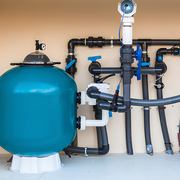
L’acqua della mia piscina è trasparente ma ha una tonalità verde/bruna… cosa fare?
Le azioni per contrastare efficacemente un’acqua trasparente verde / bruna
-
1
Verificate il TAC
Se il TAC è inferiore a 80 mg/L, aumentatelo con Alca-Plus®. > Alca-Plus®
-
2
Regolate il pH dell’acqua
con pH-Minus o pH-Plus. Regolate il pH tra 7,0 e 7,4 se trattate con cloro. Per i trattamenti al bromo, regolate il pH tra 7,4 e 7,6. Con un pH equilibrato, i prodotti di trattamento risultano più efficaci. > pH Minus, pH Plus, Quicktest, Pooltester Electronic, Pooltester pH/Cl
-
3
Eseguite un trattamento shock
per neutralizzare tutte le impurità e i microrganismi presenti nell’acqua.
- Per le piscine trattate con cloro, utilizzate Chloryte® (cloro non stabilizzato), Chlorifix® oppure Chloriklar® (cloro stabilizzato).
- Per le piscine trattate con bromo, utilizzate Aquabrome® Oxidizer.
- Per le piscine trattate con ossigeno attivo, utilizzate Bayroxy Shock.
-
4
Aggiungete un flocculante
Inserite nel cestello dello skimmer una cartuccia di flocculante Superflock Plus ogni 7–15 giorni per le piscine dotate di filtro a sabbia o a vetro
(se avete un filtro a cartuccia, utilizzate Superklar). > Superflock Plus, Superklar -
5
Filtrate 24 ore su 24
fino a quando l’acqua non sarà tornata cristallina, quindi riprendete il vostro normale ritmo quotidiano di filtrazione. Se necessario, cambiate il materiale filtrante (sabbia, Eco Filterglass Plus o AFM). > Eco Filterglass Plus, AFM
-
6
Lavate il filtro
poi rimettete in funzione la filtrazione fino a quando l’acqua non sarà incolore e trasparente. Se l’acqua non è ancora cristallina, inserite un’altra cartuccia di Superflock Plus nello skimmer.
-
7
Prodotti correlati
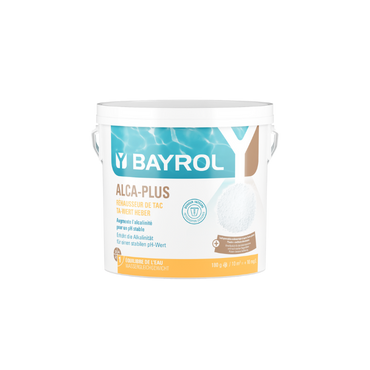 Granulato puro che permette di regolare il pH e di aumentare rapidamente ed efficacemente il TAC dell’acqua.
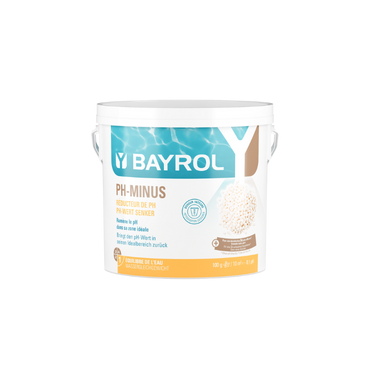 Granuli puri per abbassare il pH delle piscine con pH superiore a 7,4. Dosaggio preciso grazie al misurino incluso.
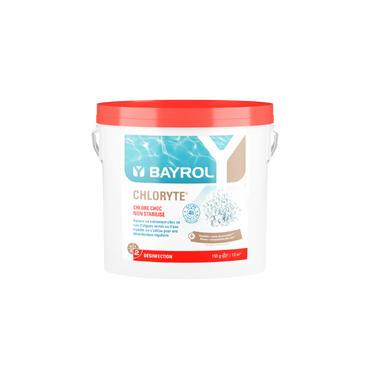 Granuli puri di ipoclorito di calcio, senza stabilizzante, per un trattamento d’urto in caso di alghe e acqua torbida.
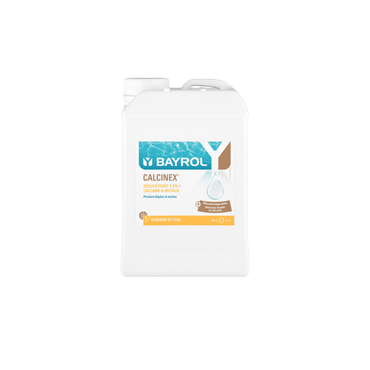 Liquido stabile in presenza di cloro e bromo per prevenire i depositi calcarei e le macchie dovute ai metalli. Protegge la vostra piscina.
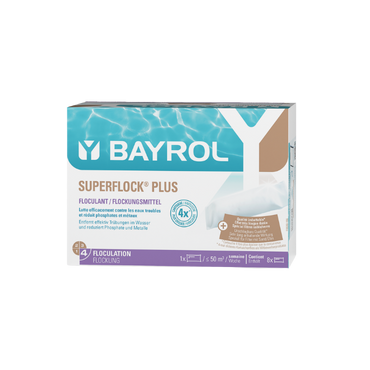 Cartuccia flocculante specifica per filtri a sabbia / vetro, per combattere in modo efficace e continuo le acque torbide.


Problemi d’acqua più comuni


Eau de piscine verte ou brune, les questions fréquemment posées (FAQ)
-
Si l’eau de la piscine se colore après l’ajout du désinfectant, ce n’est généralement pas un problème d’algues, mais un phénomène d’oxydation du fer. L’eau peut alors devenir verte ou brune en quelques heures. Ce cas est fréquent lorsque l’eau de remplissage provient d’une eau de forage. Le fer présent dans l’eau réagit avec le chlore, le brome ou l’oxygène actif et provoque cette coloration.
-
Lorsque l'eau de votre piscine est transparente avec une teinte verte ou brune, vous faites face à un problème d'oxydation de fer. Le traitement doit être adapté en conséquence.
Après avoir corrigé le TAC et le pH, réalisez un traitement choc afin d’oxyder les métaux. Ajoutez un floculant si vous possédez un filtre à sable, ou un clarifiant si vous possédez un filtre à cartouche. Filtrez 24h/24 jusqu'à ce que l'eau redevienne cristalline. Lavez votre filtre puis prévenez les dépôts métalliques et calcaires avec Calcinex pour empêcher les taches ou colorations dues aux métaux.
-
Une eau marron après remplissage avec une eau de forage est presque toujours liée à la présence de métaux, notamment le fer. Le phénomène est typique : l’eau paraît claire au départ, puis se colore en brun ou en vert après ajout du désinfectant. Le fer s’oxyde et devient visible.
-
Voici les actions pour lutter contre une eau transparente verte ou brune :
1. Vérifier le TAC et rééquilibrer pH de l’eau
2. Réaliser un traitement choc
3. Ajouter un floculant ou clarifiant
4. Filtrer 24h/24, laver le filtre
5. Prévenir les dépôts métalliques